
Water Damage in Pikeville, NC
Small-town homes 8.6 miles north of Goldsboro on US-117 — water damage help for Pikeville, ZIP code 27863.
Pikeville is the small town 8.6 miles north of Goldsboro on US-117, between Goldsboro and Fremont. Its main street is a short run of brick storefronts, a church steeple and large oak trees, and its homes are a mix of older wood-frame houses, brick ranches and newer builds on the edge of town, with farm fields beyond. The water problems here are small-town ones: older homes with older pipes, and flat farmland ground that drains slowly after rain.
Pikeville’s homes are close to Goldsboro, so help is nearby — but the houses themselves need the same careful assessment as any Goldsboro home, including the crawl space. This page covers the water problems Pikeville homes face and what to do about them.
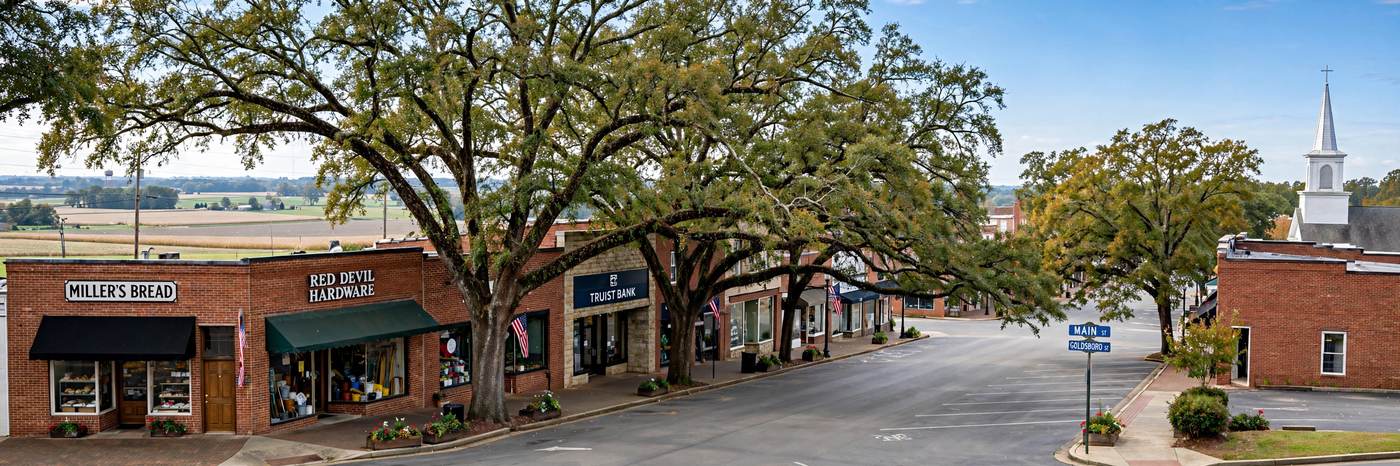
Older homes on a small-town street
Pikeville’s older wood-frame houses were built when plumbing was simpler and materials were different. Galvanised supply pipe corrodes from the inside, cast-iron drains scale and crack, and the joints in both are places where leaks begin. The first signs are usually small: a tap that runs rusty for a second, a drain that is slow every time it rains, a water bill that creeps up without explanation, a damp patch at the base of a wall.
Newer homes on the edge of town have different weak points: more bathrooms and appliances mean more hoses and connections, and a failed washing machine hose or dishwasher line can flood a home in an hour. Whichever era the home belongs to, the assessment is the same — find the full wet boundary with moisture meters, including the crawl space, before any drying or repair begins.
Farmland ground and slow drainage
Pikeville sits on the same flat coastal plain as Goldsboro, surrounded by farm fields that hold water after rain. The ground stays saturated and gives the water back slowly, so low lots hold water against foundations and groundwater can rise into a crawl space even when the rain has stopped. A heavy tropical downpour can pond on streets and lots and seep in at the lowest point of a house — under a door threshold, through a foundation crack, or up through a slab.
Tree roots add to the problem. The large oaks that shade Pikeville’s streets put roots near sewer lines, and a root that finds a clay or cast-iron joint will narrow the pipe over the years until a heavy rain backs the line up into the lowest fixture in the house. A drain that is slow every time it rains is worth a look before the backup arrives.
Crawl spaces under Pikeville homes
Most Pikeville homes sit over crawl spaces, and the crawl space is where water damage most often hides. A slow supply-line leak, a failed drain, or groundwater rising after a storm can leave standing water on the vapour barrier under the house, soaking insulation and the underside of the subfloor while the rooms above look dry. The first sign is often a musty smell, a soft spot in a floor, or paint that bubbles at the base of a wall.
A proper assessment includes the crawl space, and drying is checked with moisture readings there as well as in the living rooms. A job that only dries the rooms above while the crawl space stays wet has not finished — and the moisture left below will feed mould and odour in the months that follow.
What to do when water appears in Pikeville
The seasonal routine for a Pikeville home is short: clear the gutters when the leaves fall, check the washing machine and dishwasher hoses, look at the water heater, and walk the crawl space after long rain. A hose that is bulging or cracked is a flood waiting to happen, and replacing it is a small job against the damage a burst hose causes.
After any tropical storm, walk the property and the lowest level of the home. Look for water ponding against the foundation, a gutter that has pulled away, or a damp patch at the base of a wall. Flat ground holds water for days after a storm, and the homes that suffer most are usually the ones where the water was allowed to sit against the house.
- Turn off the water at the main if the source is a burst pipe or a failed appliance line.
- Switch off electricity to affected rooms if water is near outlets or the electrical panel.
- Move rugs, electronics and valuables to dry ground and photograph every wet room.
- Check the crawl space — the source is often there even when the rooms above look dry.
- Call for help promptly — mould can begin growing on wet materials in as little as 24 to 48 hours.
- Clear gutters in autumn and check appliance hoses once a year.
Water Damage Help in Pikeville, NC
Frequently Asked Questions
What causes water damage most often in Pikeville?
Ageing pipework in older homes, tree roots narrowing sewer lines, failed appliance hoses, and groundwater rising into crawl spaces after long rain are the most common causes.
Why does my drain back up every time it rains?
A drain that backs up in heavy rain often means the sewer line is narrowed — commonly by tree roots in an older clay or cast-iron pipe — so it cannot carry the extra flow. A camera inspection of the line can usually confirm the cause.
Why does my home smell musty after rain?
A musty smell after rain often means water in the crawl space or inside a wall cavity. A moisture check of the crawl space is the right next step.
How far is Pikeville from Goldsboro?
Pikeville is about 8.6 miles north of Goldsboro on US-117, between Goldsboro and Fremont.
What ZIP code is Pikeville?
Pikeville is in ZIP code 27863. Goldsboro’s own residential ZIP codes are 27530 and 27534.
Water Damage in Pikeville?
Check the crawl space — and the lowest drain. Call now for help in Pikeville, NC 27863.
📞 Call (919) 555-0140