
Emergency Water Extraction
Standing water removed fast from floors, basements and crawl spaces.
Learn more →A winter freeze splits a pipe and the damage spreads fast — through walls, under floors and into the crawl space. Here is what happens, what to do first, and how the repair is sequenced.
Goldsboro winters are mild by northern standards, and that is exactly why burst pipes catch people out. A few nights below freezing are enough to freeze water in an exposed line — a pipe in an unheated crawl space, a hose bib on an outside wall, a supply line in a garage or an attic. Water expands as it freezes, the pipe splits, and when the thaw comes the water runs free. A split that starts at two in the morning can put a large amount of water into a home before anyone wakes up.
The damage from a burst pipe is rarely limited to the pipe itself. Water from a supply line runs under pressure, so it spreads fast — across floors, down through a subfloor, into insulation and drywall. In a crawl-space home it can also run down into the space below, soaking the framing from underneath. This page covers why pipes burst in Goldsboro, what to do in the first minutes, and how extraction, drying and repair are sequenced afterwards.
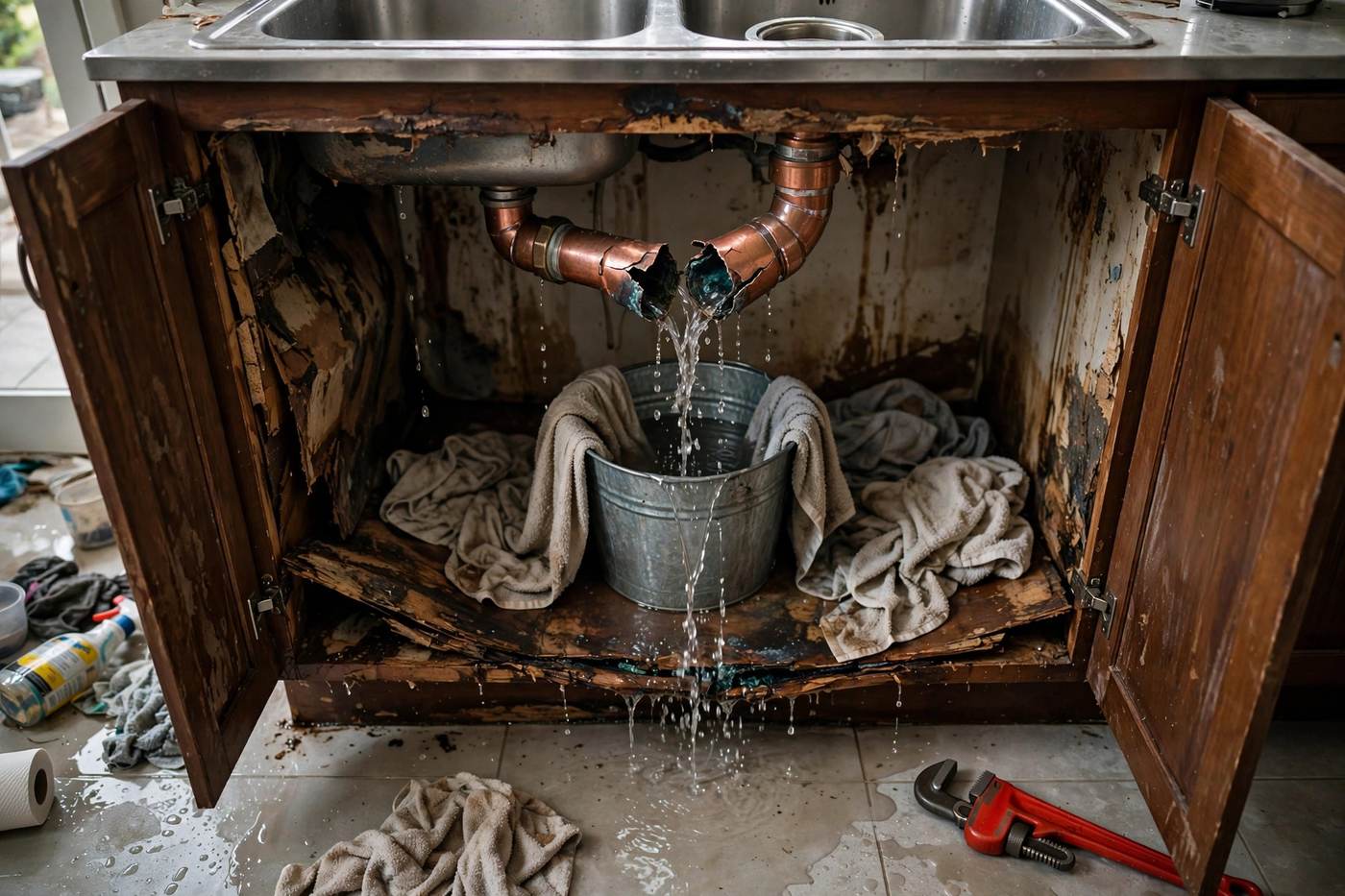
A pipe bursts because water inside it freezes and expands. The split usually happens where the pipe is coldest and least protected: an uninsulated line in a crawl space, a hose bib on a north-facing wall, a supply line running through an unheated garage, or a pipe in an exterior wall with thin insulation. Older homes are more exposed, because their pipes were often run before modern insulation practice, and because decades of use can thin a pipe wall. Farmhouse-era homes around Goldsboro and the early-1900s bungalows downtown are the most likely to have vulnerable runs.
The other local pattern is the vacant home. Rental properties around Seymour Johnson Air Force Base sometimes sit empty between tenants, and a home with the heating turned down and nobody inside to notice a problem can freeze, split and flood without anyone knowing for days. The same applies to a home left empty while the owners are away for the holidays. A burst pipe discovered a week after it happened is a much larger job than one found the same morning — which is why a quick check of a vacant home after a freeze is worth the trip.
Shutting off the main is the step that limits the damage. A supply line under pressure can release a large volume of water in a short time, and every minute the main stays open adds to the wet area. Know where your main shut-off is before you need it — it is usually where the water line enters the home, often in a crawl space, a utility room or near the street. If you cannot find it, call for help and describe the situation; a technician can talk you through it.
Do not try to thaw a frozen pipe with an open flame, and do not stand in water that may be near live electricity. If the burst is in a wall, do not cut the wall open before the wet boundary has been assessed — the water may have spread further than the visible stain suggests.
Once the water is off, the job follows the standard restoration sequence. First, assessment: the wet boundary is mapped with moisture meters, including the crawl space below and the wall cavities around the burst. Water from a supply line runs fast and far, so the wet area is often larger than it looks. Then extraction: standing water is removed with pumps and extraction units, and the broken pipe is isolated so the water supply can be restored to the rest of the home where possible.
Then drying: air movers and dehumidifiers are placed to cover the full wet area, and readings are taken over successive visits. Wet insulation is removed, and drywall that has lost its shape is cut out. Only when readings show the structure is dry does repair begin — the pipe itself is repaired or replaced, and then drywall, flooring and trim are restored. Rebuilding over damp framing is the mistake this sequence exists to prevent.
A burst pipe on an upper floor is often the worst case, because the water travels down through the house: through the floor, into the ceiling below, down the inside of walls, and into the crawl space. A burst in a crawl space is quieter but no less damaging — the water soaks insulation and the underside of the subfloor, and the first sign in the living room may be a soft floor or a musty smell weeks later.
That is why the assessment matters more than the visible puddle. A moisture meter can find water inside a wall cavity or under a floor that looks dry from above. If a room was wet and the wall next to it was not checked, the job is not finished. Ask for the readings, and keep a copy with your photographs — they are the record that the structure was dry before repairs began.
The same habits that prevent a first burst prevent a second. Insulate exposed pipes in crawl spaces, garages and attics. Disconnect garden hoses before winter and shut off the inside valve to an outside tap where one exists. On the coldest nights, let a tap drip slowly on an exposed run and keep the heating on, even in a home that is empty — a few degrees of warmth in the house is far cheaper than a burst pipe. Know where the main shut-off is, and make sure everyone in the household knows too.
For a vacant rental, the checklist is shorter and more important: keep the heating on, check the home after a freeze, and look at the water heater, the washing machine hoses and the crawl space. A five-minute check after a cold snap can catch a split before it becomes a flood. And if a pipe has burst once in a particular run, that run deserves insulation and attention before the next winter, because the same cold spot will freeze again.
Standing water removed fast from floors, basements and crawl spaces.
Learn more →The full sequence — assessment, extraction, drying and repair.
Learn more →Turn off the water at the main — that is the single most important step, because a supply line under pressure can release a large volume of water quickly. Then switch off electricity to affected rooms if water is near outlets, move valuables to dry ground, take photographs, and call for help.
It only takes a few nights below freezing to freeze water in an exposed line. Pipes in unheated crawl spaces, garages, attics and outside walls are the most vulnerable, especially in older homes. The split happens during the freeze, and the water runs when the thaw comes.
Yes. In a crawl-space home, water from a burst pipe can run down into the space below, soaking insulation and the underside of the subfloor. The rooms above may look dry while the structure below is wet, which is why a proper assessment includes the crawl space.
Drying often takes several days, depending on how much water there was, the materials involved and the humidity. In Goldsboro’s humid climate it can take longer. The work is finished when moisture readings show the structure is dry, not when a set number of days has passed.
Insulate exposed pipes in crawl spaces, garages and attics, disconnect garden hoses before winter, keep the heating on during cold snaps — even in an empty home — and know where the main water shut-off is. Check a vacant home after a freeze, looking at the water heater, washing machine hoses and crawl space.
Turn off the main, then call. The sooner extraction and drying start, the smaller the job.
📞 Call (919) 555-0140