
Water Damage Restoration
The full sequence — assessment, extraction, drying and repair.
Learn more →Sewer backups and black-water flooding need a different response from a clean-water leak. Contaminated water is removed, what it soaked is taken out, and what remains is cleaned and disinfected.
A sewer backup is the water damage nobody wants to talk about — and the one where doing the wrong thing carries the most risk. Sewage is black water: it carries bacteria and other contaminants, and anything porous it touches cannot be made safe by drying alone. In Goldsboro, backups happen for familiar reasons: heavy rain overwhelming older sewer lines, tree roots narrowing clay and cast-iron pipes, a blocked main, or a drain line that has failed under a slab or in a crawl space.
Sewage in a crawl space is a pattern Goldsboro sees more than most towns. A broken drain line under the house can leak for weeks before anyone notices, because the mess is out of sight — until the smell reaches the living room or a floor starts to feel soft. This page explains how sewage cleanup is done, what gets removed and what can be cleaned, and what to do — and not do — while you wait for help.
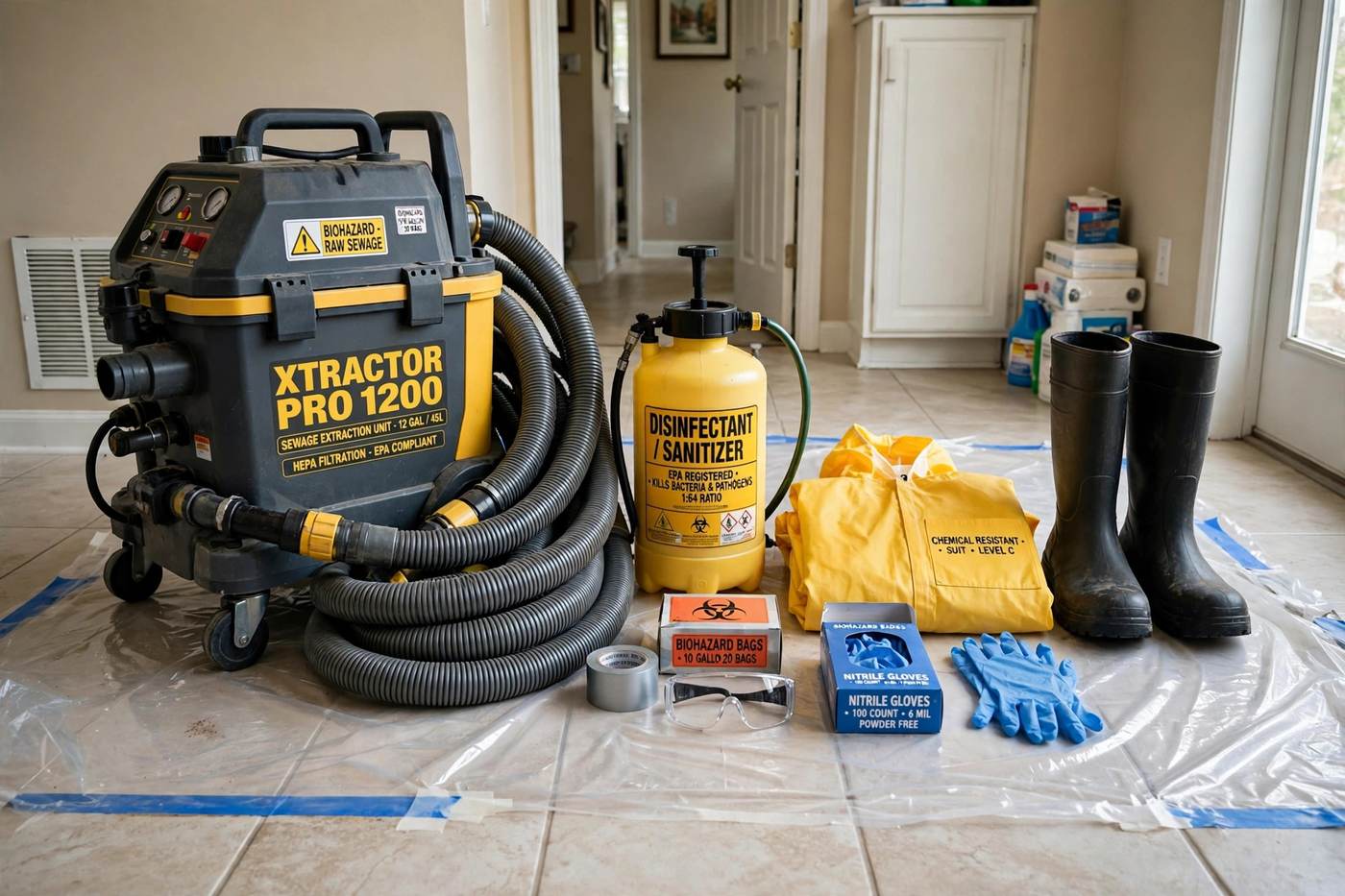
Water is sorted into three categories, and sewage sits in the most serious one. Clean water from a supply pipe can usually be dried and cleaned. Grey water from an appliance needs more thorough cleaning. Black water — sewage, and flood water that has crossed the ground — is treated as contaminated from the start. The rule that follows is simple: porous materials soaked in black water are removed, not dried. Carpet, carpet pad, drywall, insulation and particle board that have absorbed sewage are taken out and disposed of.
Hard surfaces are different. Concrete, tile, metal and sealed wood can be cleaned and disinfected once the waste is removed. The distinction matters because it decides both the scope of the job and the safety of the home afterwards. A contractor who offers to dry sewage-soaked carpet pad and put it back is offering the wrong job. If you are unsure whether the water in your home is sewage, treat it as contaminated until a professional has assessed it.
Cleanup starts with stopping the flow. That may mean shutting off water use in the home, or it may mean the problem is in the main line and needs a drain specialist — a technician can usually tell from where the backup appears and whether fixtures on the lowest level are affected first. Then the standing waste and water are extracted with dedicated equipment that is kept separate from clean-water gear.
Next comes removal. Soaked porous materials are cut out and bagged for disposal, and the extent of removal is set by how far the contamination reached — which is why the wet boundary is mapped with meters rather than guessed. Remaining surfaces are cleaned and disinfected, and the area is dried with air movers and dehumidifiers. In a crawl space, the sequence is the same but harder to reach: wet insulation is removed, the ground and framing are cleaned, and drying equipment is set up under the house. Only when the area is clean, dry and verified by readings does repair begin.
Most Goldsboro homes sit over crawl spaces, and a drain line runs through that space. When a joint fails or a pipe cracks, the leak goes straight onto the ground under the house. There is no puddle in the kitchen to warn you. The first signs are usually a smell, a soft spot in a floor, or flies and dampness that will not go away. By the time the problem is found, insulation may be saturated and the subfloor may be wet from below.
Crawl-space sewage jobs need containment and care. The space is low and poorly ventilated, so protective equipment and proper handling matter. Wet insulation is removed, the affected ground and framing are cleaned and disinfected, and drying is monitored with readings taken in the crawl space itself, not just in the rooms above. A job that only dries the living room while the crawl space stays wet has not finished. If your home has a crawl space and you notice a persistent sewage smell, have the space inspected — the source is often there even when the rooms above look dry.
The most important rule is to stay out of the water. Sewage carries organisms that can cause illness, and the risk is highest for children, older people and anyone with a weakened immune system. Rubber gloves and a mop are not enough protection for a sewage backup, and a household vacuum will spread contamination rather than remove it.
The second rule is to stop adding water. Every flush and every shower sends more water toward the blockage. Until the cause is found, the home’s drains should be treated as out of service. If the backup appeared after heavy rain, note the timing — it helps a technician judge whether the problem is in the home’s line or further down the system.
Once the area is clean, the drying stage begins, and it is checked the same way as any other water job: with moisture readings compared against dry areas of the same home. Sewage jobs often take longer to dry than clean-water jobs, because more material has been removed and the remaining structure has been thoroughly wetted during cleaning. Drying equipment should keep running until the readings show the structure is dry.
Repairs follow the same rule as the rest of restoration: nothing is rebuilt over damp material. New drywall, flooring and trim go in only after the readings are right. If the backup was caused by a failed drain line, that line also needs attention — cleaning up the water without fixing the pipe that delivered it leaves the home ready for a repeat. Ask what caused the backup and what was done about the cause, not just about the water.
The full sequence — assessment, extraction, drying and repair.
Learn more →Standing water removed fast from floors, basements and crawl spaces.
Learn more →Yes, sewage is treated as contaminated black water. It can carry bacteria and other organisms that cause illness. Keep children and pets out of the affected area, do not mop or vacuum it yourself, and call for professional help promptly.
Generally no. Porous materials soaked in black water — carpet, carpet pad, drywall and insulation — are usually removed and disposed of, because they cannot be made safe by drying alone. Hard surfaces such as tile and concrete can usually be cleaned and disinfected.
Most Goldsboro homes sit over crawl spaces, and drain lines run through that space. A failed joint or a cracked pipe leaks directly onto the ground under the house, where it can go unnoticed for weeks. The first signs are often a smell or a soft spot in a floor.
Common causes include heavy rain overwhelming older sewer lines, tree roots narrowing clay and cast-iron pipes, a blocked main line, and drain lines that have failed under a slab or in a crawl space. A technician can usually tell whether the problem is in the home’s line or further down the system.
Yes. Do not flush, shower or run the washing machine until the cause is known, because every use sends more water toward the blockage. Treat the home’s drains as out of service until the problem is found.
Stay out of the water and stop using the drains. Call now for sewage cleanup help in Goldsboro and Wayne County.
📞 Call (919) 555-0140