
Water Damage in Downtown Goldsboro, NC
Historic homes, older pipes and low-lying streets around the city centre — water damage help for Downtown Goldsboro, ZIP code 27530.
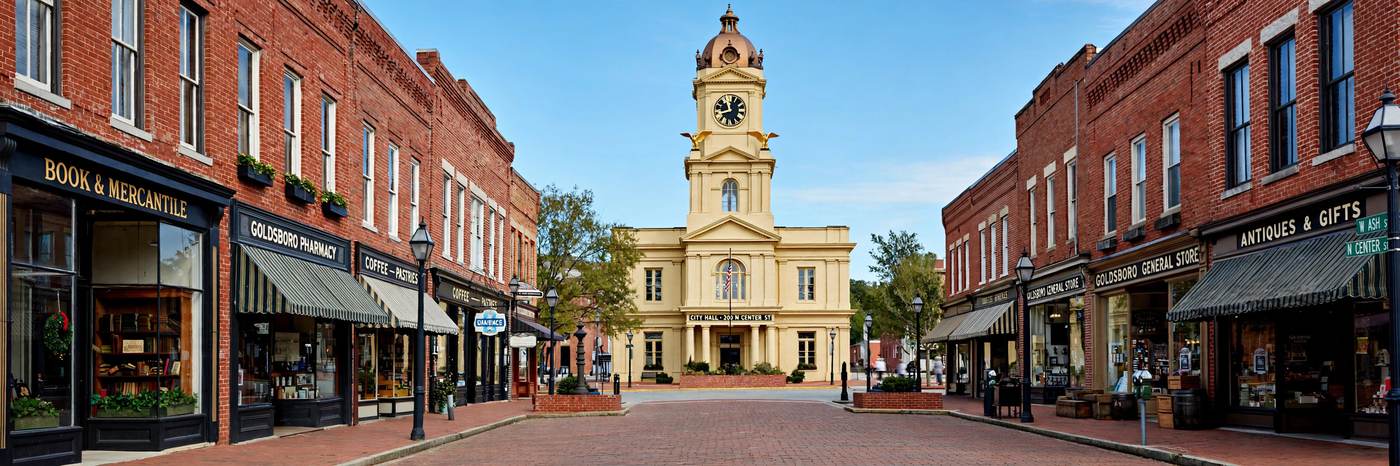
Downtown Goldsboro is the oldest part of the city, and its homes show it. Early-1900s bungalows and Craftsman houses stand alongside brick storefronts, the blocks around Herman Park, and the Berkeley Boulevard corridor toward Wayne Memorial Hospital. These are handsome homes — and they are the homes most likely to have the water problems that come with age: older supply and drain lines, cast-iron and clay pipes narrowed by decades of use, and crawl spaces that have never been properly dried.
The other downtown factor is the ground. Downtown sits low on the coastal plain, and the Neuse River runs east of the city centre. After long rain, water has nowhere to drain quickly, and low-lying streets and lots can hold standing water for days. This page covers the water problems downtown homes face, the housing types involved, and what to do when water appears.
Older homes, older pipes
Downtown Goldsboro’s housing stock is its character and its risk. Homes built in the early 1900s and the post-war decades often still run on pipework from their original construction — galvanised supply lines that corrode from the inside, cast-iron drains that scale and crack, and clay sewer lines that tree roots love. A root that finds a clay joint will keep growing into it, narrowing the pipe a little each year until a heavy rain finally backs the line up into the lowest fixture in the house.
Inside, the signs of an ageing system are usually small before they are large: a tap that runs rusty for a second, a drain that is slow every time it rains, a water bill that creeps up without explanation, a damp patch at the base of a wall. Each is worth attention, because each is cheaper to investigate than the flood that follows when a corroded line finally gives way. A burst pipe in a downtown bungalow can put a large volume of water into the home before anyone is awake to hear it.
River water and low ground
The Neuse River is the reason Goldsboro exists where it does, and it is also the city’s largest water risk. The river has set record crests in Hurricane Floyd in 1999, Hurricane Matthew in 2016 and Hurricane Florence in 2018, and its flood stage near Goldsboro is 18 feet, with major flooding at 24 feet. When the river is high, the ground stays saturated and gives the water back slowly, so low-lying lots can sit wet for days after the rain has stopped.
Downtown’s flat streets make the problem worse. There is little fall for water to run off, so a heavy tropical downpour can pond on streets and lots and seep in at the lowest point of a house — under a door threshold, through a foundation crack, or up through a slab. Homes near the river side of downtown are the most exposed, but any low lot in the 27530 area can take on water in a long storm. Flood water that has crossed the ground is treated as contaminated black water, and porous materials it soaks are generally removed rather than dried.
Crawl spaces under downtown homes
Most downtown homes sit over crawl spaces, and the crawl space is where downtown water damage most often hides. A slow supply-line leak, a failed drain, or groundwater rising after a storm can leave standing water on the vapour barrier under the house, soaking insulation and the underside of the subfloor while the rooms above look dry. The first sign is often a musty smell, a soft spot in a floor, or paint that bubbles at the base of a wall.
A proper assessment of a downtown home almost always includes the crawl space. Water there is removed with a pump, wet insulation is generally taken out because it cannot be dried in place, and the framing above is checked with a moisture meter before drying equipment is set up. A job that only dries the living room while the crawl space stays wet has not finished.
What to do when water appears downtown
Downtown businesses need the same sequence as downtown homes, with one addition: stock, records and equipment should be moved first, because they are usually the most expensive thing in the room. A shop or office that takes on water should document everything with photographs before anything is moved, and should not run electrical equipment that has been wet.
For homeowners, the most useful habit is a seasonal check: look at the crawl space after long rain, check the water heater and washing machine hoses, and watch the lowest drain in the house during heavy rain. Downtown’s older lines give warning before they fail — slow drains, rusty water, a damp patch — and catching those warnings is far cheaper than dealing with the flood that follows.
- Turn off the water at the main if the source is a burst pipe or a failed appliance line.
- Switch off electricity to affected rooms if water is near outlets or the electrical panel.
- Move rugs, valuables and electronics to dry ground and photograph every wet room.
- Keep children and pets out of standing water, especially if it may be sewage or flood water.
- Call for help promptly — mould can begin growing on wet materials in as little as 24 to 48 hours.
- Do not use a household vacuum on standing water, and do not cut into a wall before the wet boundary is mapped.
Water Damage Help in Downtown Goldsboro, NC
Frequently Asked Questions
What causes water damage most often in Downtown Goldsboro?
Older supply and drain lines are the most common cause — corroded galvanised pipe, scaled cast-iron drains and clay sewer lines narrowed by tree roots. River flooding and storm water on low-lying lots are the other major cause, especially after tropical rain.
Is my downtown home in a flood area?
Parts of Goldsboro near the Neuse River and on low-lying ground are exposed to flooding, and the river has set record crests in Hurricanes Floyd, Matthew and Florence. Check the flood maps for your street, and remember that flood water is treated as contaminated black water.
Why does my downtown home smell musty after rain?
A musty smell after rain often means water in the crawl space or inside a wall cavity. In downtown homes the source is frequently a slow leak or groundwater under the house. A moisture check of the crawl space and the affected wall is the right next step.
Can water damage in a historic home be repaired?
Yes. The restoration sequence is the same — assess, extract, dry with readings, then repair. Historic materials need care, and drying should be verified with moisture readings before any repair begins, because rebuilding over damp framing causes the same problems again.
What ZIP code is Downtown Goldsboro?
Downtown Goldsboro is in ZIP code 27530. The other main residential ZIP code in Goldsboro is 27534. The 27532 and 27533 ZIP codes are post-office-box codes with no homes to serve.
Water Damage in Downtown Goldsboro?
Older homes need a careful assessment — including the crawl space. Call now for help in Downtown Goldsboro, NC 27530.
📞 Call (919) 555-0140